
How a house comes back
A terraced house comes back in an order the building itself sets. A wet wall cannot be plastered, a wall cannot be closed before the cables are in it, and nobody moves in before the checks are done. This page lays the work out in that order, with the waits that belong to it.
Read before it is ours
Before we buy, we read the house. Outside: the roof line from the street and from the back, the chimney stacks, the brickwork for bulges and for cracks over the openings, the sills and stone heads, the gutters and downpipes, the ground against the wall and the yard gully. Inside: the joists and floors, the stairs, the cellar and the smell of it, the plaster, and every damp patch, because the kind of damp tells you its cause.
Three tests before any work
- Wiring, by a registered electrician
- Gas, by a Gas Safe registered engineer
- Asbestos, by a refurbishment and demolition survey
The asbestos survey is not a formality. Under the Control of Asbestos Regulations 2012, asbestos has to be found before refurbishment work on a building that may contain it, and any house built before 2000 may. It comes before a single tool goes to a wall.
Notices and duties, before the work
The paperwork starts before the work, and some of it sets the calendar.
Party wall notices
Terraces share walls. Work to a party wall — cutting into it, raising it, underpinning it, taking out a chimney breast — needs a party structure notice to the neighbour at least two months before work starts. Digging close to a neighbour’s foundations needs at least one month. If the neighbour has not agreed in writing within 14 days, a dispute is taken to have arisen and party wall surveyors settle it.
waits: two months, or oneBuilding control
Notifiable work — rewiring, a new boiler, replacement windows, renovating a wall or floor that counts as a thermal element — is either certified by an installer registered with a competent person scheme or notified to Bolton Council’s building control or a registered building control approver. Either way it ends with a certificate.
waits: inspections at stagesPlanning, where it applies
Most repair work inside a house needs no planning permission. Some streets in the north of Bolton lie in a conservation area, such as St Paul’s, Halliwell, where changes to the outside are looked at more closely.
Our duties as a client
A company doing building work as part of its business is a commercial client under the Construction (Design and Management) Regulations 2015. It makes the arrangements for the work, and where more than one contractor is on site it appoints a principal designer and a principal contractor and sees that there is a construction phase plan.
Back to the fabric, then repaired
Strip-out takes the house back to its structure: failed plaster, old cables, redundant pipes, broken fittings. The waste leaves with a registered carrier. What is left is the fabric, and the fabric is repaired before anything new goes on it.
- lintels and sills
- chimney stacks and redundant flues, vented and capped
- gutters and downpipes
- ground levels against the wall
- cellar ventilation
- joints made good in lime
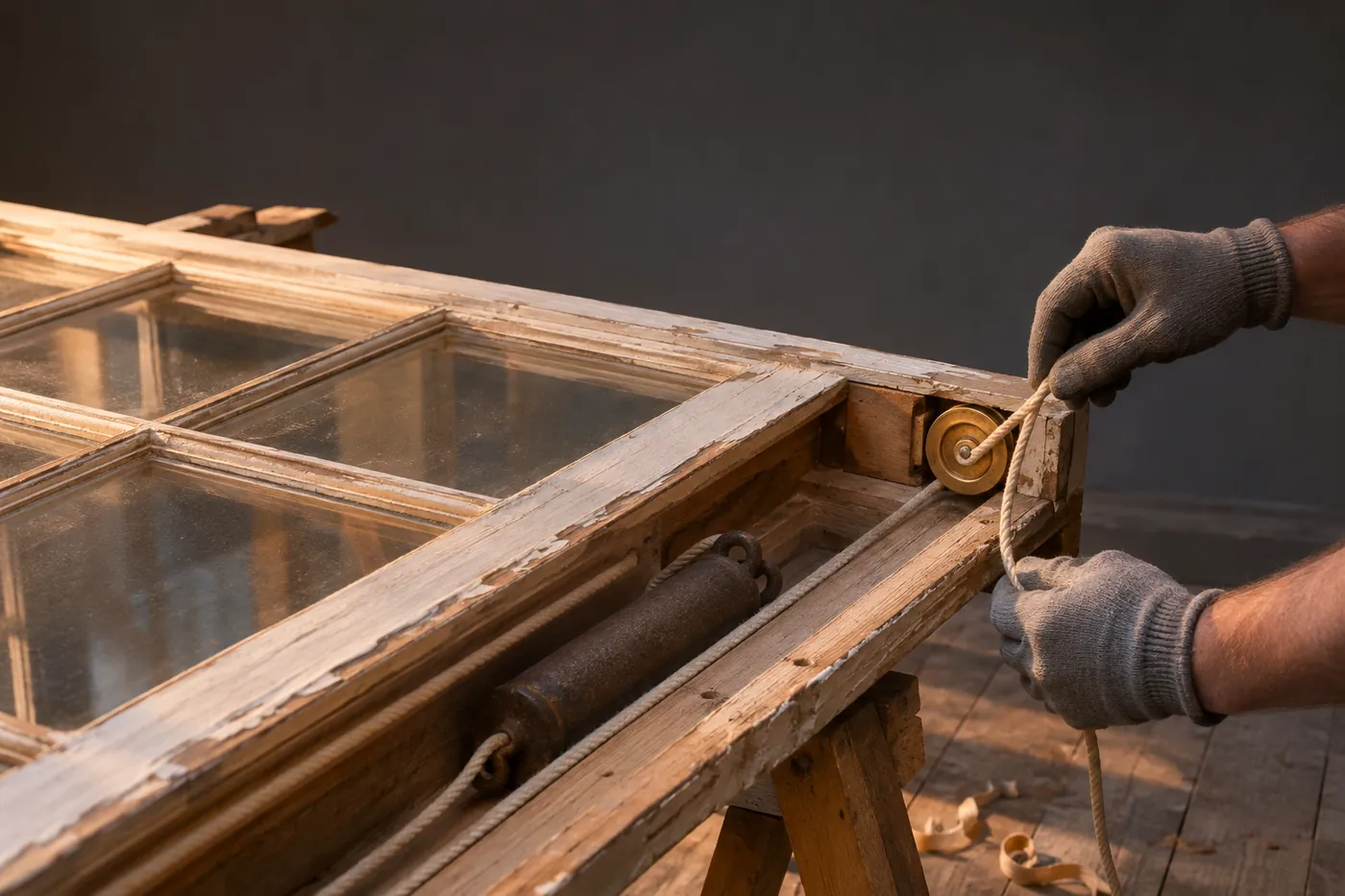
Box sash windows are repaired where they can be. The beads come off, the sashes come out, new cords go over the pulleys, the weights are hung again, and the window runs. Where a frame is past repair it is replaced, and a replacement window is notifiable work.
Drying, then first fix
Water is stopped at its source before anything is closed in, and then the house waits. A solid brick wall dries through its own thickness, so drying is counted in weeks, and the cellar is given its air so it can dry too.
While the walls dry, first fix goes in: cables and back boxes for the electrician, pipework for heating and hot water, ducting for the extract fans — everything that will be hidden once the walls are plastered. Electrical work in a home is notifiable under Part P and is done by an electrician registered with a competent person scheme; gas work is done by Gas Safe registered engineers.
Plaster, second fix, and the checks
Plaster suits the wall it goes on: lime on old solid masonry that needs to breathe, gypsum where the background allows. Plaster dries before paint. Then second fix: sockets and switches, radiators, the boiler commissioned, kitchen and bathroom, doors and skirtings, then decoration and floors.
Finishing is a list of checks, done before anyone moves in:
- gas safety check
- electrical installation condition report
- energy performance certificate, band E at the least
- a smoke alarm on every storey
- carbon monoxide alarms where they are required
- building control completion
- a snagging walk, room by room
When a party wall notice has to go
Choose the kind of work and the day you plan to start. The three dates follow from the Party Wall etc. Act 1996, as the government’s explanatory booklet sets them out.
- Last day to serve the notice
- —
- Served that day, no written agreement by this day means a dispute
- —
- The notice lapses if the work has not started by
- —
A notice sent by post counts from when it arrives, so send it in good time. A new wall built on the boundary line needs one month’s notice too, with rules of its own. Where a dispute arises, party wall surveyors settle it with an award. Without scripts the dates are not worked out; the periods above are all it uses.